

Category: Emigrating to Costa Rica | Reading time: approx. 8 minutes
If you love your dog, you won’t leave them behind – not even when the dream of emigrating to Costa Rica becomes a reality. The good news: it’s possible, it’s feasible, and with the right preparation, it goes more smoothly than most people fear. The honest truth: there are a few things you absolutely need to know before booking the first vet appointment.
This article guides you through all important steps – from bringing your dog into the country to daily life in your new home in the tropics.
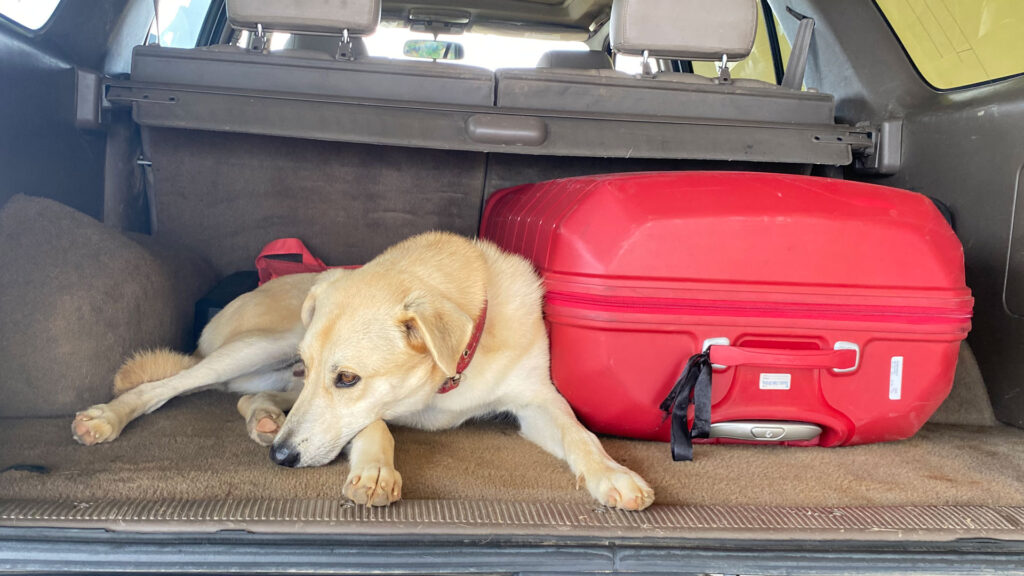
Entry to Costa Rica with a Dog: The Documents
Costa Rica is not a country with particularly strict import regulations for dogs – but there are clear requirements that you must meticulously fulfill. A forgotten document can become a real problem at the border.
You absolutely need the following:
1. International Health Certificate
The core of your travel documents. It must be issued in Spanish and confirm that your dog is free of diseases and parasites. Important: The examination must not have taken place more than two weeks before departure. Have the certificate issued and officially certified by your competent official veterinarian – you must carry the original and a copy.
2. International Vaccination Certificate with the following proofs:
Corresponding vaccinations must be documented with the type of vaccine and date.
- Rabies (for all dogs 4 months and older)
- Distemper
- Leptospirosis
- Parvovirus
- Hepatitis
3. Microchip
(not mandatory, but highly recommended – if your dog ever gets lost, they are almost impossible to identify without a chip)
However, it is always best to check again yourself. You can find corresponding information here:
https://san-jose.diplo.de/cr-de/service/zoll/heimtiere-1525712
Practical Tip:
Plan the official veterinarian appointment for the health certificate for 10 to 12 days before departure – this way you stay within the two-week period and have a buffer for any necessary adjustments.
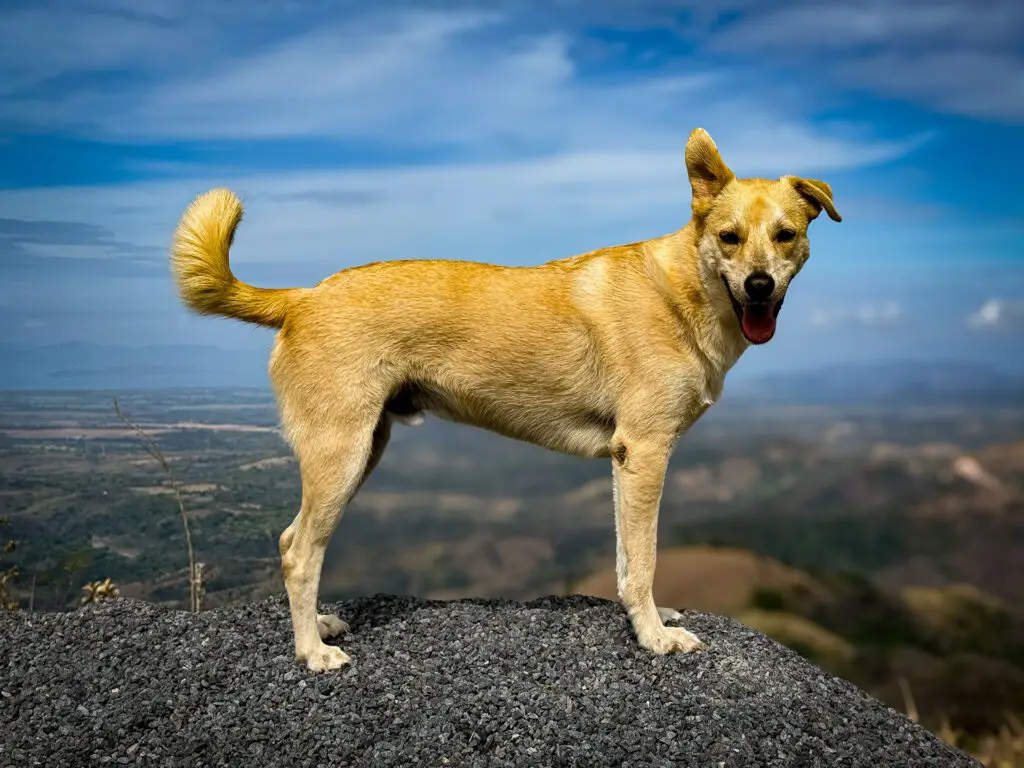
The Flight: Cabin or Cargo?
Small dogs up to about 8 kg are allowed in the cabin on many airlines – in a suitable transport bag under the seat in front. For medium and large dogs: they travel as cargo in the air-conditioned and pressurized cargo hold.
This sounds more unsettling than it is. Many expats with dogs report that their animals handled the journey surprisingly well. Crucial is a familiar, well-ventilated transport crate, in which your dog regularly sleeps before the trip – this significantly reduces stress.
Important: Book your dog directly with the airline, not through third parties, and do so as early as possible. Most flights from Europe to Costa Rica include a layover – often in the USA. In this case, also inform yourself about the American entry requirements for animals in transit.
Is your dog traveling as cargo?
If you need to send your four-legged friend ahead, an import permit from the “Salud Pública Veterinaria” in San José is also required. In this case, inform yourself in good time, as the bureaucratic lead time can be several weeks.
Arrival in Costa Rica:
What happens at the airport?
At Juan Santamaría Airport in San José, the veterinary border control point (SENASA) awaits. Your documents will be checked here. If everything is complete and correct, you usually get through without major waiting times.
Have ready:
- Health certificate (original + copy)
- Vaccination certificate
- Your own passport
After entry: Visit the vet – preferably within the first few days after arrival. A local vet can examine your dog again and, most importantly, show you what you need to consider in daily life in Costa Rica.



Life with a Dog in Costa Rica: What Changes
This is where the really important stuff begins – and what hardly anyone talks about openly.
Tropical Health Risks for Dogs
Costa Rica is beautiful – and has wildlife that is fundamentally different from Europe. For your dog, this means: different risks, different parasites, different diseases.
Ehrlichia is one of the most common diseases in dogs in Costa Rica. Transmitted by ticks, it often progresses insidiously and can become very serious if left untreated. Many experienced expats recommend: Have your dog tested shortly after arrival and keep them protected year-round with a good tick and flea preventative. Products like Nexgard, Frontline, or Advantix are available in Costa Rica.
Toads – especially the Cane Toad – are an underestimated danger. Their skin secretion is toxic to dogs. If your dog licks or takes a toad into its mouth, this can lead to serious symptoms within minutes. These animals are active especially during the rainy season and at dusk. Keep your dog indoors during these times or supervise them closely.
Insects of all kinds – spiders, horseflies, Africanized bees – can sting or bite your dog. Keep antihistamines ready, and discuss with your vet what to do in an emergency.
Veterinarians in Costa Rica
There are good veterinary practices in urban centers and tourist regions. In rural areas – and for many expats, this is precisely the appeal for nature and tranquility – the nearest practice might be a bit further away.
Our advice: Find your vet in the region before you need them. Get their cell phone number. And register your dog there with all documents as soon as you arrive.
For the region around Miramar, Veterinaria Dr. Gómez directly in town is a reliable first point of contact – it is open 7 days a week, which is not a given in this region, and is known in the expat community for its competent and dedicated work.
The practice is about 12–15 minutes away from the property above Miramar. In Facebook groups for expats (e.g., “Expat Pet Owners Costa Rica”), you will find further reliable recommendations from the community.

Fenced Property – In Costa Rica, Not a Luxury, But a Necessity
Anyone living with a dog in Costa Rica knows: a securely fenced property is not a matter of comfort, but of safety. Stray dogs, poisoned meat in rural areas (unfortunately not a myth), road traffic without sidewalks – dogs that can leave the property are at risk.
A fully enclosed property with a sturdy fence and secured gate is one of the most important decision criteria for dog owners when choosing new accommodation – and often harder to find than one might think.
Because the fence not only protects your dog from leaving the property – it also keeps uninvited guests out. In the Puntarenas region, as in many rural parts of Costa Rica, coyotes are not uncommon. They are nocturnal, clever, and can pose a serious threat to small to medium-sized dogs – especially in the early morning hours or at dusk. Other wild animals such as raccoons or opossums are also regularly found near residential properties. A sturdy, seamlessly closed fence is therefore not just comfort, but active protection for your dog – day and night.
Our property is completely fenced accordingly.
What Dogs Will Love About Costa Rica
Enough with the warnings – because the quality of life for dogs in Costa Rica, on the right property, is simply exceptional.
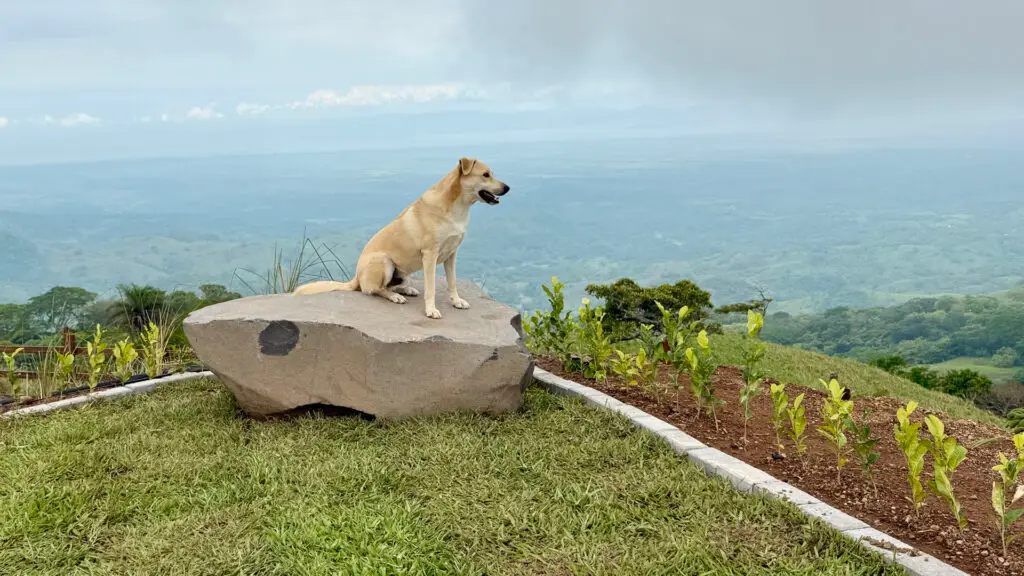
No winter half-year that reduces outdoor activity to a minimum. No cramped city apartments. No muzzle requirement on hikes. Instead: panoramic views in the morning, a garden during the day, the tranquility of a rural mountain location in the evening. For dogs who love space, nature, and exercise, Costa Rica is a paradise – provided the home is right.
Checklist: Emigrating with a Dog to Costa Rica
Before Departure (at least 4–6 weeks prior):
- Plan vet appointment for health certificate (max. 2 weeks before departure)
- Check and update vaccinations (rabies, distemper, leptospirosis, parvo, hepatitis)
- Have a microchip implanted (if not already present)
- Obtain and accustom your dog to a transport crate
- Book flight with dog directly with the airline
- For cargo transport: Apply for SENASA import permit
- Discuss travel medications with your vet
After Arrival:
- Locate a veterinarian in the region
- Have your dog tested for Ehrlichia and other tropical diseases
- Ensure tick and flea protection
- Assess toad risk and adjust routines
- Join community groups (expat groups with a pet owner focus)
A Property That Protects Your Dog
Anyone emigrating with a dog inevitably thinks differently when choosing new accommodation than without a pet. Fenced area, secure gate, enough space to run – these are not extras, but prerequisites.
Our property above Miramar in the province of Puntarenas meets exactly these requirements: The 5,000 m² property, fully enclosed with a sturdy wooden fence, the electric entrance gate, and the secured access door ensure that even small dogs cannot leave the property. In addition, there is a pleasant climate at an altitude of approx. 750 meters – significantly more tolerable than the humid coastal heat that would stress many dog breeds.
If you can imagine starting your day with your dog on a 52 m² terrace overlooking the Pacific – then take a closer look at the property.
→ Learn more about the house and property
→ Contact us directly and ask questions
Do you have questions about living with a dog in Costa Rica or about entry? Write to us directly – we are happy to share our experiences.