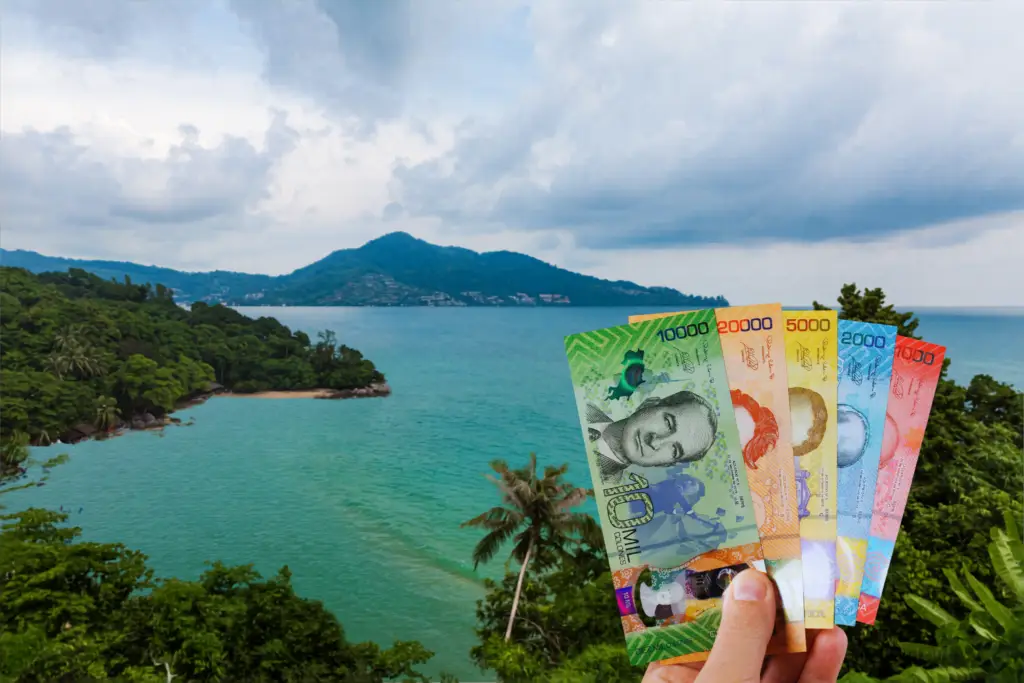
“Can I even afford Costa Rica?” That is the question I am asked most often in conversations with people interested in emigrating – even before the question about the house itself. And it is a good, honest question.
Because the cost of living in Costa Rica is neither the bargain paradise some travel blogs sell it as, nor as expensive as a first glance at imported cheese in the supermarket might suggest.
In this article, I will show you what life here realistically costs in 2026 – with concrete figures, a sample budget for a couple, and an honest comparison with Germany. No glossy promises, but the perspective of someone who lives up above Miramar.
The short answer: What you should budget for
A couple living in Costa Rica away from the expensive tourist hotspots can live comfortably on around USD 2,000 to 3,000 per month (about €1,700 to €2,600) – including food, utilities, a car, healthcare and some leisure. Those who live frugally and more like locals can also manage on USD 1,500 to 2,000 (approx. €1,300 to €1,700). In upscale beach towns such as Tamarindo or Nosara, however, the same can quickly cost 40 to 80% more.
On average, the cost of living in Costa Rica is around 25 to 30% below the German level – in rural regions like our area near Miramar, often even more noticeably below. But the average hides what is interesting: some things are much cheaper here, others surprisingly expensive. That is exactly what we will look at now.
What is affordable – and what is surprisingly expensive
The key takeaway up front: In Costa Rica, you save on everything that is local, and you pay extra for everything that is imported.
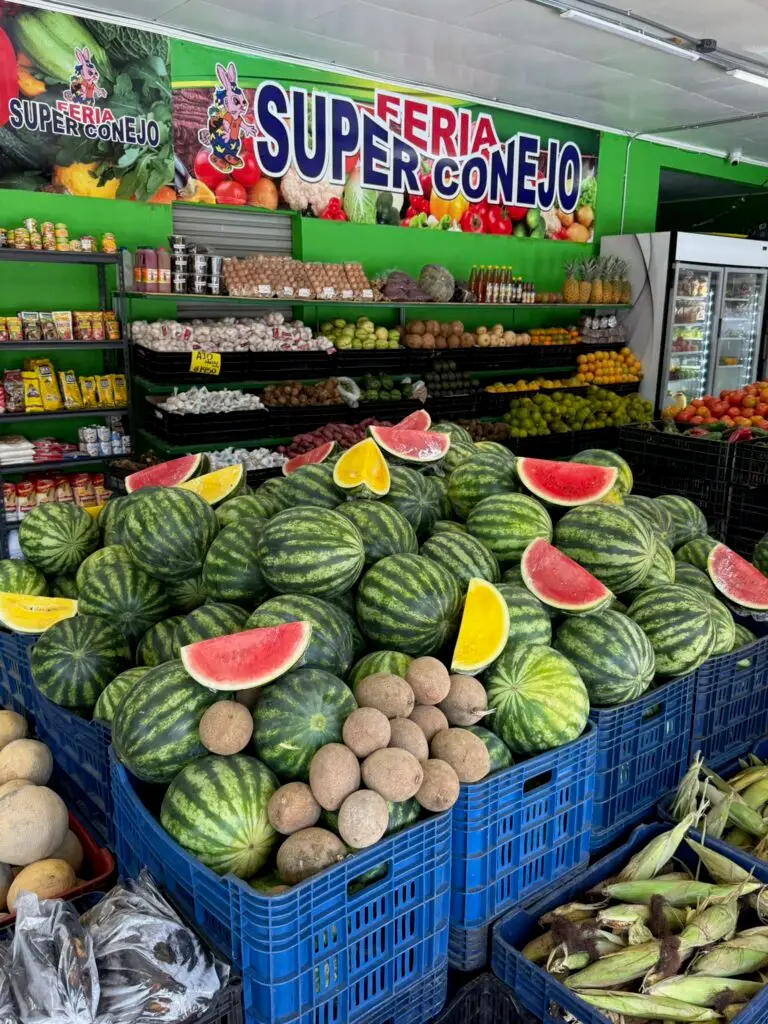
Affordable are fresh foods from the market (the Feria), local fruit and vegetables, rice, beans, chicken, skilled trades, a meal at a soda (the typical small local eatery), and healthcare. It gets expensive with imported products: German cheese, cold cuts, electronics, cars, and anything with a “brand” label. Imported goods sometimes carry high duties – a car can cost noticeably more here than in Europe due to import taxes.
The most honest money-saving tip is therefore: If you are willing to embrace local life – the weekly market, seasonal fruit, Tico cuisine – you can live very affordably here. If you bring your German shopping habits with you 1:1, you will pay more.
Sample budget:
What a month looks like for a couple
To make it tangible, here is a realistic monthly budget for a couple living rurally – as is possible here up above Miramar. The figures are guideline values in US dollars (2026), converted to euros at an exchange rate of around 1 USD ≈ €0.86:
| Item | Monthly (USD) | Monthly (€) | Note |
|---|---|---|---|
| Groceries (bought locally) | 300 – 450 | 260 – 390 | Market + supermarket, Tico cuisine |
| Electricity | 60 – 120 | 50 – 105 | Highly dependent on air conditioning; significantly less with solar |
| Water (municipality) | 15 – 25 | 13 – 22 | very affordable |
| Internet (Starlink) + mobile phone | 50 – 70 | 43 – 60 | Fast internet from approx. USD 35 (≈ €30) |
| Gas (for cooking) | 10 – 15 | 9 – 13 | Bottled gas |
| Car: fuel + maintenance | 120 – 220 | 105 – 190 | Gasoline approx. USD 1.62/liter (≈ €1.39) |
| Healthcare (Caja) | 80 – 150 | 70 – 130 | Depending on declared income |
| Household, leisure, eating out | 250 – 450 | 215 – 390 | Soda meals from just a few dollars |
| Total (excluding rent) | approx. 900 – 1,500 | approx. 775 – 1,290 | If you own your home, rent is not applicable |
One key item is intentionally missing from this table: rent. In Costa Rica, it is the single biggest cost factor – a simple apartment starts at around USD 400 (approx. €345), while by the sea or in expat neighborhoods it quickly reaches USD 1,000 (approx. €860) and more. And this is exactly where you have the greatest leverage over your monthly costs.
The biggest lever for saving: Buying instead of renting
If rent is the most expensive item, then owning your own home changes the entire calculation. Those who live rent-free in Costa Rica can often live on what would be utilities alone in Germany.
Our house up above Miramar is a good example of this. It was built turnkey in 2024 to European building standards – meaning: no hidden renovation costs, no never-ending construction site. Electricity is supplied via the public grid (ICE). Water comes from the municipality and is affordable. And on the 5,000 m² plot, you can grow fruit trees, herbs and vegetables – part of the grocery budget literally grows right outside the door.
In other words: the ongoing costs of such a house are low, precisely because construction quality, energy and self-sufficiency were considered from the start. You can find more details on the page about the house with a 5,000 m² plot.

Healthcare:
Costa Rica’s underestimated cost advantage
One item that repeatedly surprises expats in a positive way is healthcare. As a legal resident, you pay into the public health insurance system Caja (CCSS) – the contribution is typically around 7 to 11% of declared income and also covers your partner and children. In return, you gain access to the public healthcare system, which enjoys a very good reputation in Latin America.
Many expats combine the Caja with private supplemental insurance or pay for private treatment directly – and that, too, is often cheaper here than in Europe or the USA. I have dedicated a separate article to the topic: Health insurance in Costa Rica.

Cost of living in Costa Rica vs. Germany – the honest comparison
Bottom line, Costa Rica is cheaper than Germany – but not in every category. Here is an honest assessment:
Cheaper than in Germany: fresh local fruit and vegetables, healthcare, skilled help and services, eating at local eateries, property tax and utilities.
About the same: branded supermarket products, higher-end restaurants, electricity (relatively high).
More expensive than in Germany: cars and imported electronics (high import duties), imported European foods, international branded products.
So the often-cited average of “around 28% cheaper than Germany” is true – but your personal result depends heavily on how much you embrace local life. And above all, it depends on whether you rent or own your home.
To be honest:
What you should be prepared for
To keep this article honest, a few points need to be included:
Anyone who continues to shop “European-style” at first will be surprised at how expensive imported favorite products are in the weekly grocery run. Having your own car is practically essential in the hills around Miramar (4WD is an advantage) – the purchase costs a bit more due to import taxes, while ongoing running costs with gasoline at around USD 1.62 per liter (approx. €1.39) are manageable. And your electricity bill can rise noticeably with constant air conditioning – which is why good construction, cross-ventilation and solar can save you real money.
None of this is an obstacle. These are simply the levers that determine whether you end up at the lower or upper end of the budget.
Conclusion: Affordable – if you know how
Costa Rica is very affordable for expats from Europe and America if you live locally and choose your housing wisely. The biggest levers are housing costs and shopping habits. Those who live rent-free in a well-built, energy-efficient home and embrace the countryside and its markets can enjoy a relaxed life here for a fraction of what many people from Germany are used to – with a Pacific view as a bonus.
That is exactly the idea behind our house up above Miramar: low ongoing costs, space for self-sufficiency – and a location where life in the green season feels like a vacation.
Would you like to run the numbers yourself?
Take a look at the house with a 5,000 m² plot up above Miramar or schedule a viewing – on site or via WhatsApp video call. If you would like to dive deeper into what life here is like, you will find more honest insights in our articles on the World Happiness Report, health insurance in Costa Rica, and the green season.